
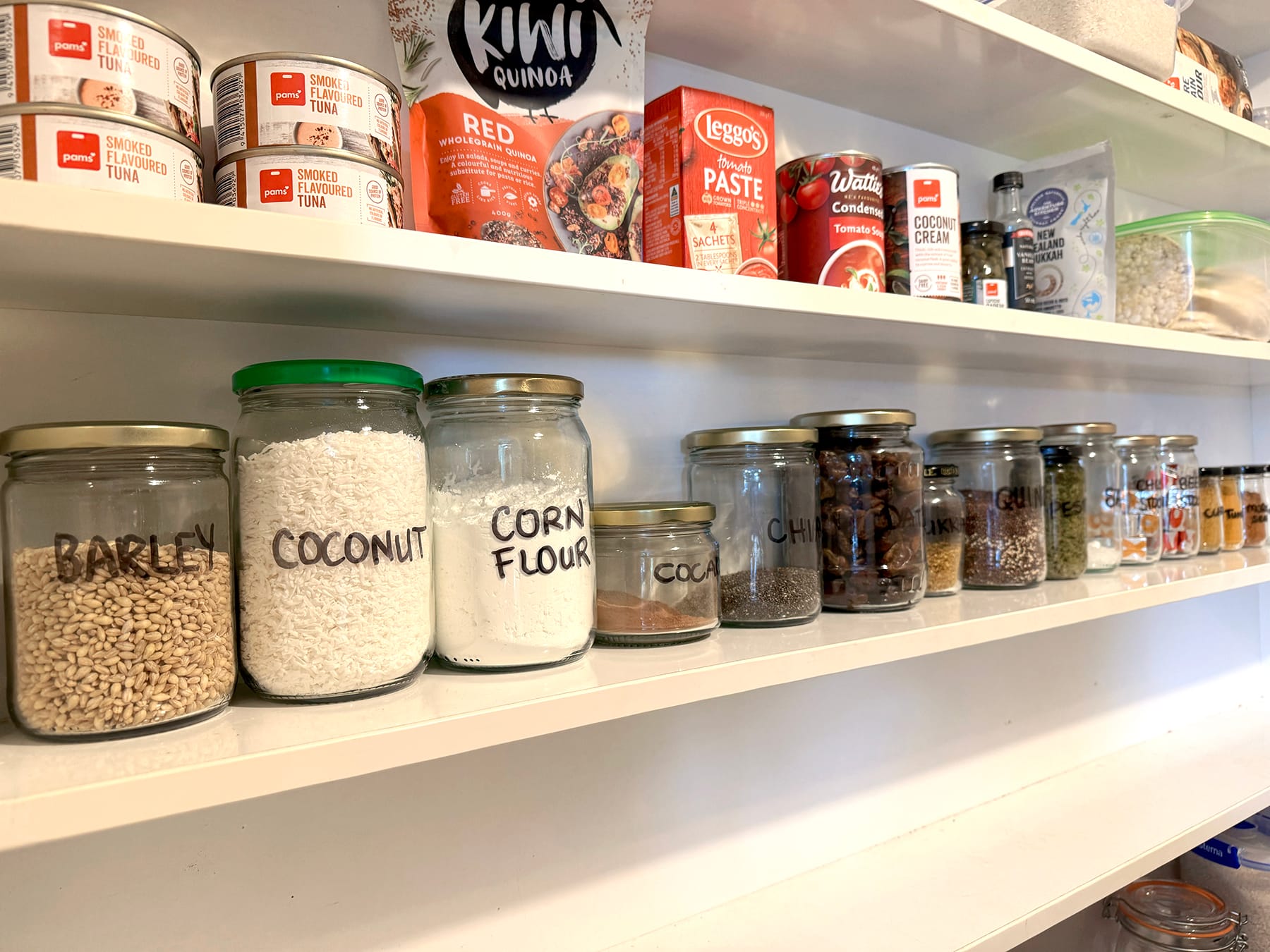
The tap runs cold over the meat tray, and I turn it side to side, rinsing off the last smear of blood. I think about someone standing at a sorting line somewhere, hands moving fast, and I rinse a little longer than I need to, a small act of consideration for a person I will never meet. Once it's clean it goes into the recycling bin by the back door, next to the glass crate. But I've been keeping some glass jars, empty passata bottles, old honey jars and the odd yoghurt jar, since I've started choosing the glass ones over the plastic where the supermarket gives me the choice, lined up on a shelf like something out of a pantry advertisement, except nobody staged it. It just happened, the way things happen when you start paying attention to what leaves your house.
We didn't used to think about rubbish. Not really. In Queensland, the bin went out, the truck came, and that was the whole transaction. It was paid for somewhere in the rates, invisible, automatic, the kind of service you only notice when it doesn't show up. Here in Westport, rubbish has a price tag you touch with your own hands, and that changes something in how a household behaves.
It isn't really the council that empties the rubbish bag on our street. A contractor, Smart Environmental, runs the collection on the council's behalf, weekly for refuse, fortnightly for recycling. Recycling comes free with the service, a crate for glass and a bin for everything else. But rubbish is different. Every official bag costs money at the supermarket, and that price is doing more work than it looks like. It's prepaying the whole journey, the truck to the kerb, the handling at the transfer station, the drive north to the landfill at York Valley in Nelson. Buy the bag, and you're buying a small piece of a very long supply chain, one most people never think about because most places don't make you.
That's the part that took us a while to understand after we moved. In Australia, rubbish disappeared without a decision attached to it. Here, every bag has a ceiling, a size, a cost, and a limit to how much you can fit before you need another one.
The system doesn't ask you to care about waste. It just makes indifference expensive. And indifference being expensive turns out to be a remarkably effective way of getting people to notice their own habits.
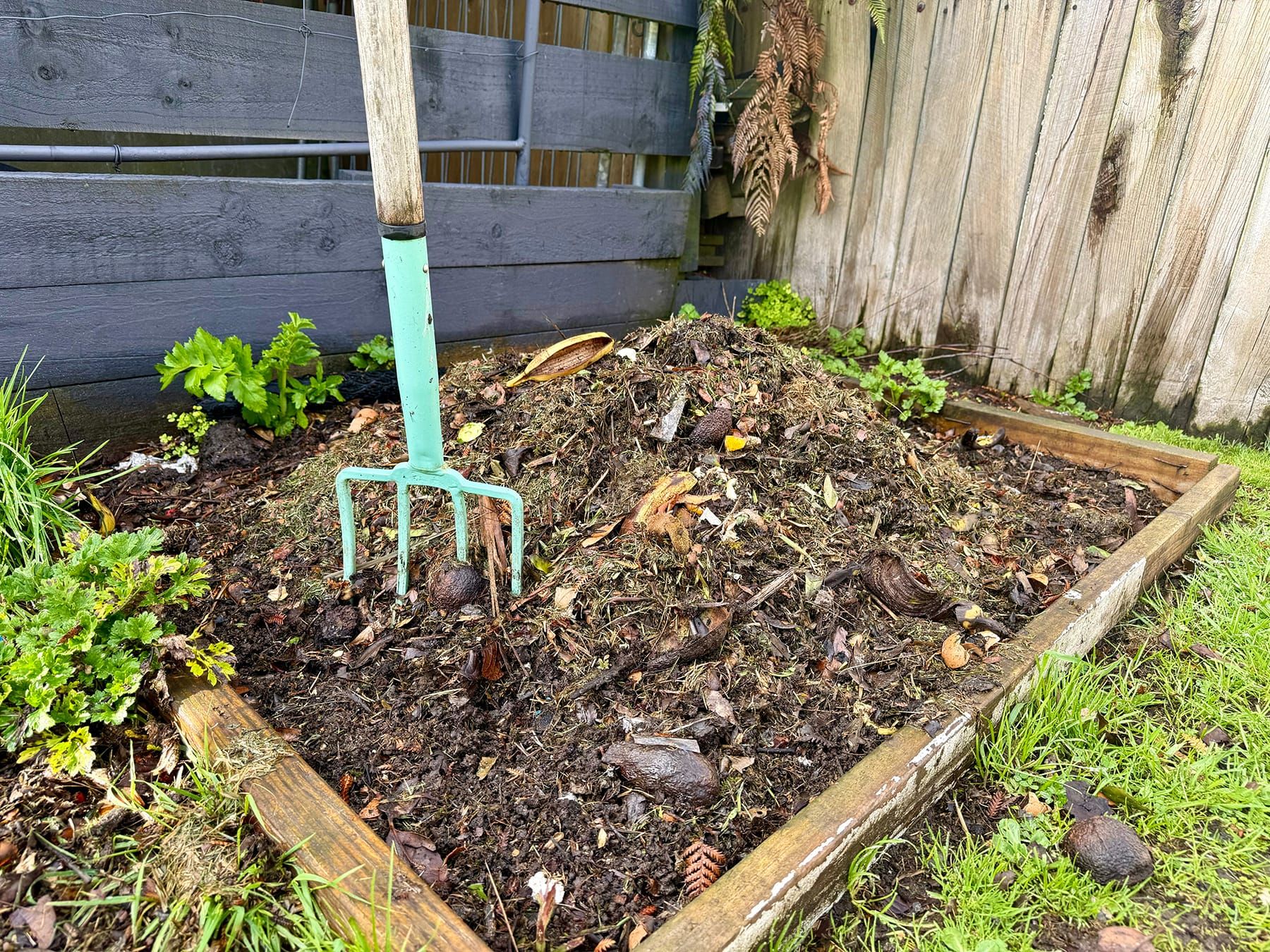
So we noticed ours. The kitchen scraps that used to go in a bin liner now go into a compost heap out the back, turning slowly into something the garden actually wants. The grass Brad cuts most weeks gets left to break down rather than bagged and hauled away, which sounds like a small thing until you realise how much bulk that alone takes out of a household's rubbish. The plastic meat trays get rinsed, not because the council demands it, but because somewhere down the line a person has to sort what we send, and a rinsed tray is one less thing for them to handle at arm's length. The glass bottles that used to go straight in the bin now sit on a shelf holding flour and rice and lentils, and if I'm honest they look better there than the plastic containers ever did and far less costly.
None of this felt like sacrifice. It felt more like a slow correction, the kind you don't notice happening until you look at how little rubbish actually goes out to the kerb each week. The read newspaper doesn't go in the recycling bin so much as it goes into a basket by the fire, along with the flattened cardboard from small cartons, both of them earning a second life as kindling before winter's done with them. An empty capers jar holds exactly the right amount of dried herbs or spice, a small thing, but satisfying in a way I didn't expect, the jar shaped for its old job turning out to be perfectly shaped for its new one.
A council that charges for landfill and lets recycling ride free isn't subtle about what it wants from you. It wants you to think, even for a second, about which bin something belongs in, or whether it belongs in a bin at all. And once you start thinking about it once, you tend to keep thinking about it.
There's a version of this story that's still being written locally. Council had planned to move Westport and the surrounding zone onto wheelie bins funded through the rates, which would have made rubbish here feel a lot more like it did back in Australia, bundled in, invisible, paid for whether you filled the bin or not. That change has been pushed back a year while council works out how much people would actually use it. For now, the bag system stays, and so does the small daily arithmetic that comes with it. Whether that changes what happens on kitchen benches across the district remains to be seen. A rates-funded bin removes the friction. It also removes the reminder.
I think about that sometimes when I'm rinsing a tray at the sink, water running cold over my hands. It's such a small act. It solves nothing on its own. But it's the kind of small act a place can quietly train into you, bag by bag, dollar by dollar, until reaching for the tap feels less like a chore and more like the obvious thing to do. Not because anyone told us to. Because a system that makes waste visible also makes the person on the other end of it a little more real, and once you've pictured them, it's hard to stop.
The jars are still on the shelf. Flour in one, rice in another, a peanut butter jar holding flour, a capers jars holding dried herbs. They didn't cost us anything. They just took a bit of rinsing, and a system that made rinsing feel worth the trouble.
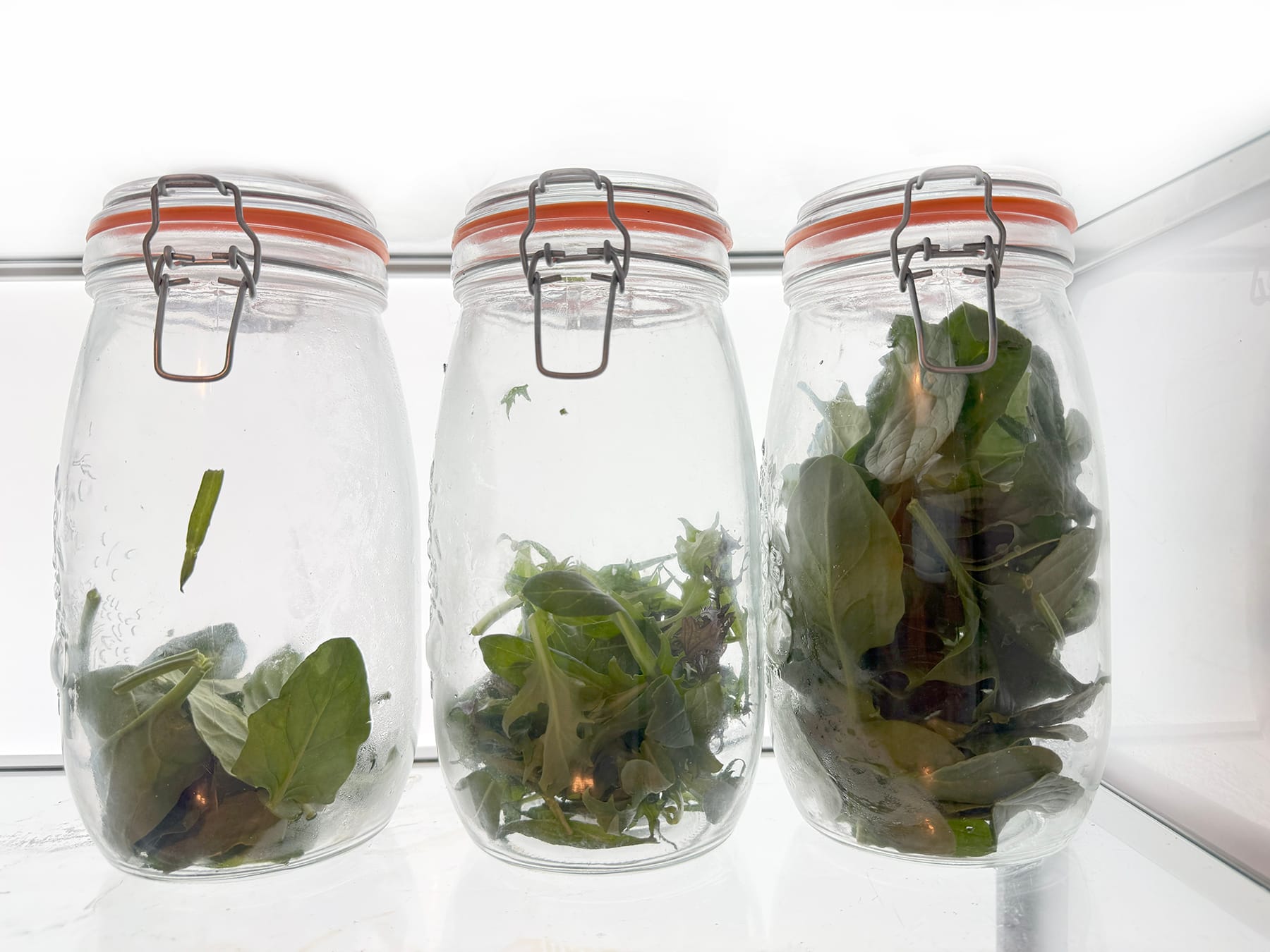
Glass jars in the fridge also keep produce fresh for longer