The Kawatiri Coastal Trail
I met Stu Henley at Trail HQ on Palmerston Street in Westport, which might not seem especially notable except that ten years earlier there was no trail to have a headquarters for.
No project team, no construction programme, no eight sections winding their way down the coast towards Charleston. There was an idea. Ten years later, that idea has a headquarters overseeing the everyday runnings (pardon the pun) of the Kawatiri Coastal Trail.
Stu is quick to play down his part in what happened next. A geologist from a mining family whose West Coast history reaches back to the gold rush days, he was a keen tramper and explorer and, in 2015, found himself with a bit of time on his hands.
Holcim was closing. Jobs were disappearing and there was a gloomy feeling around Buller, the kind of feeling that comes when an industry closes and people are left wondering what comes next. History has a habit of repeating itself here.
Stu had been watching something else happening around New Zealand. Cycle trails were taking off. The Old Ghost Road was on Buller’s doorstep, the West Coast Wilderness Trail was drawing riders further south, and the Otago Central Rail Trail had already shown what could happen when people travelled through small towns, needing beds, meals, coffee, repairs and somewhere to stop along the way. He began wondering what cycling tourism might offer Buller.
Then in October 2015 he noticed an article in the Westport News about a small group of Charleston residents who were looking at a possible coastal cycling and walking route between Charleston and Westport. Stu spoke to one of the group, Ant Black, who advised that some people from Cape Foulwind and Carters Beach were also keen to be involved.
On Thursday 5 November 2015 around 40 people arrived at Geotech in Charleston for a public meeting.
The record from that night carries a wonderfully plain heading: PROPOSED COASTAL CYCLE/WALKING TRAIL.
There was no grand name and no glossy plan, but the bones of what would occupy the next decade were already there. They talked about an umbrella organisation, while keeping local people involved in their own sections of the route. There was land tenure to consider, private property, DOC, funding and the eventual need for a Trust or incorporated society.
They also agreed the trail should be Grade 2, accessible to as wide a range of abilities as possible. Even at that first meeting they were thinking about who might use it and what it could bring back to the district through tourism, business and jobs.
Five days later they met again, this time as a working group. The minutes record Richard Niederer, Steve White, Stu Henley, Annabel Gossett, Siobhan Neill, Sarah Stephen, Vince Rogers and Sheri Lee around the table. Ant Black and Evan Morris sent apologies, and others were already being drawn into the conversation. A committee was then formed with Richard Niederer as chair.
The minutes from 10 November are striking to read now because almost every difficulty that would occupy the next ten years is sitting there on the page. They needed to work out where the trail would go and who owned the land beneath it. Individual landowners would need to agree. DOC and council support were required. Conversations with Ngāti Waewae were underway. There would be bridges, engineering, consents, funding and, somewhere along the way, a legal structure to hold the whole thing together.
They even needed a name. For the time being, they called it the ‘Charleston Westport Coastal Trail.’
In early 2016 the committee was formalised into the Charleston Westport Coastal Trail Trust.
Stu describes what followed as a series of green lights. Each one had to turn before they could move on to the next.
One of the first green lights came from Buller District Council. Then-mayor Garry Howard was enthusiastic about the idea at a time when finding new economic opportunities for the district mattered enormously. The trail was worked into the district’s wider economic planning and, when the proposal was presented to council, Dave Hawes summed up the possibilities in six words: “This trail will be a game changer.”
That support gave the group something it badly needed if the idea was going to keep moving forward. The project received its first $50,000 of government funding, followed by another $50,000 from Development West Coast towards the feasibility and business-case work. It was nowhere near enough to build a trail, but it was enough to give the idea its head start.
Still, none of the other green lights were guaranteed and, of all of them, Stu keeps coming back to the landowners. They were being asked to allow a public trail across land that had always been private.
A trail can look convincing drawn across a map, but the line means very little if the people who own the paddock, farm or piece of coastline beneath it do not want it there.
Those conversations took time. There were first conversations, follow-up conversations and more conversations once the project began looking as though it might actually happen. Back then, it must have been hard to imagine just how many walkers and riders might one day use the trail. That took foresight, but also a fair bit of trust in the idea and in the people asking them to believe in it.
Without them, Stu says, there would have been no trail.
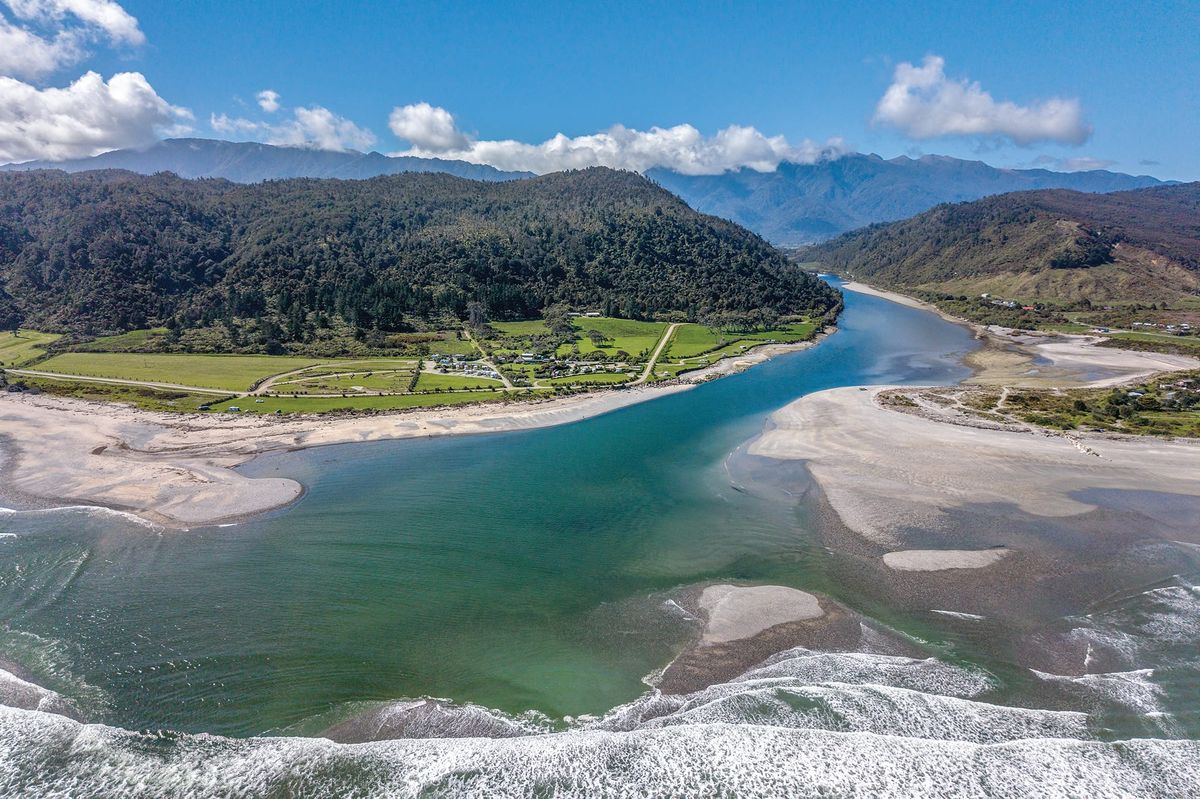
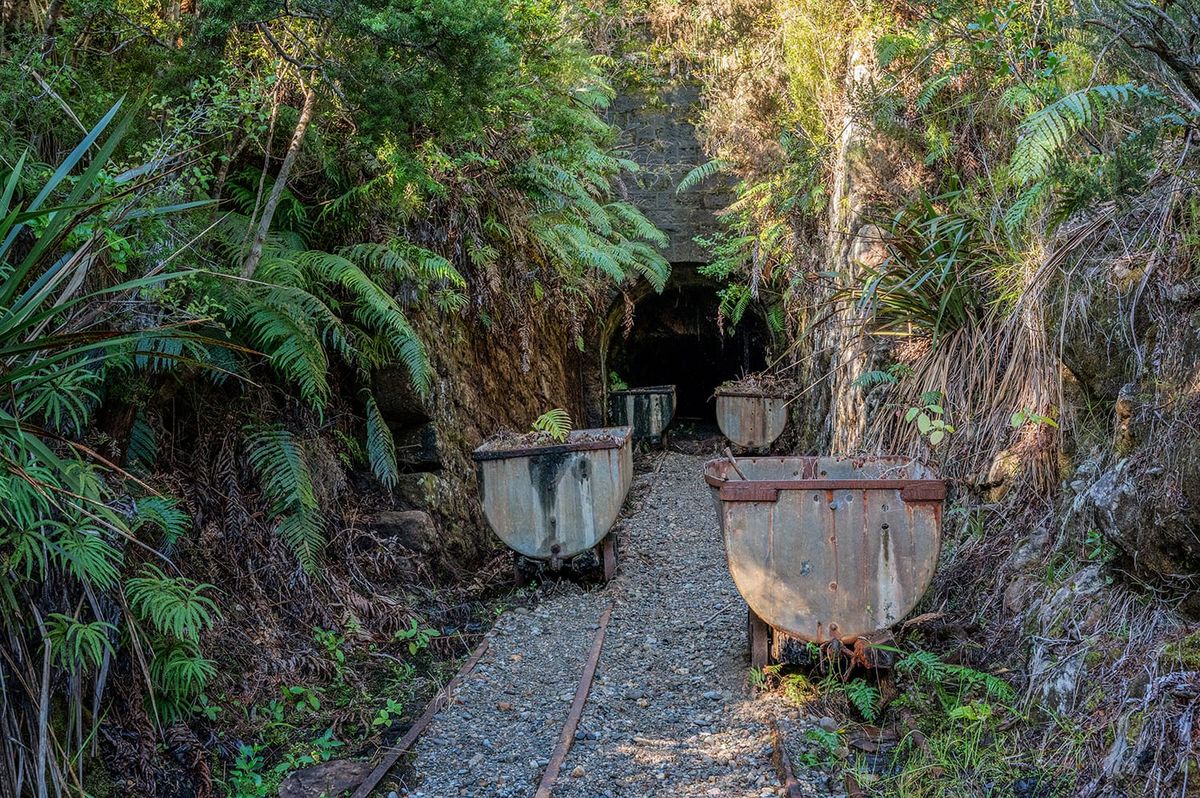
Meanwhile, somebody still had to work out where the thing could physically go. Stu remembers spending hours with others walking through fields and forests, looking for possible routes and occasionally getting a decent shock from an electric cattle fence. There were wetlands, waterways, historic gold sites, Māori land and wildlife habitat to think about. Four substantial suspension bridges would eventually be required.
The early work was not especially glamorous. It meant boots in paddocks, maps spread across tables and plenty of conversations over fences.
Slowly, though, the lights kept changing.
In November 2018 came the biggest green light yet: $9.36 million in government funding to construct the trail. It was a huge step forward, but it did not suddenly make the hard parts easy.
Through 2019 there were access agreements, legal arrangements, surveying, project plans, consultants and detailed design. Ecologists and archaeologists became part of the work.
Historic places and areas of cultural significance had to be considered. There were protected species, wildlife permits and a long list of practical details still to work through.
In 2020, local contractor WestReef began construction. Then came Covid, two major Westport floods, delays, changing conditions, cost increases, and contract variations. There were plenty of roadblocks, but the project team kept finding a way around them.
Rather than look too hard at the whole distance at once, they broke it into bite-sized pieces, the eight sections that make up the trail today. In December 2020 the first section from Westport to Carters Beach opened and bit by bit, more of the trail opened. They celebrated reaching halfway in 2023, and two years later the full trail was finally opened in Charleston.
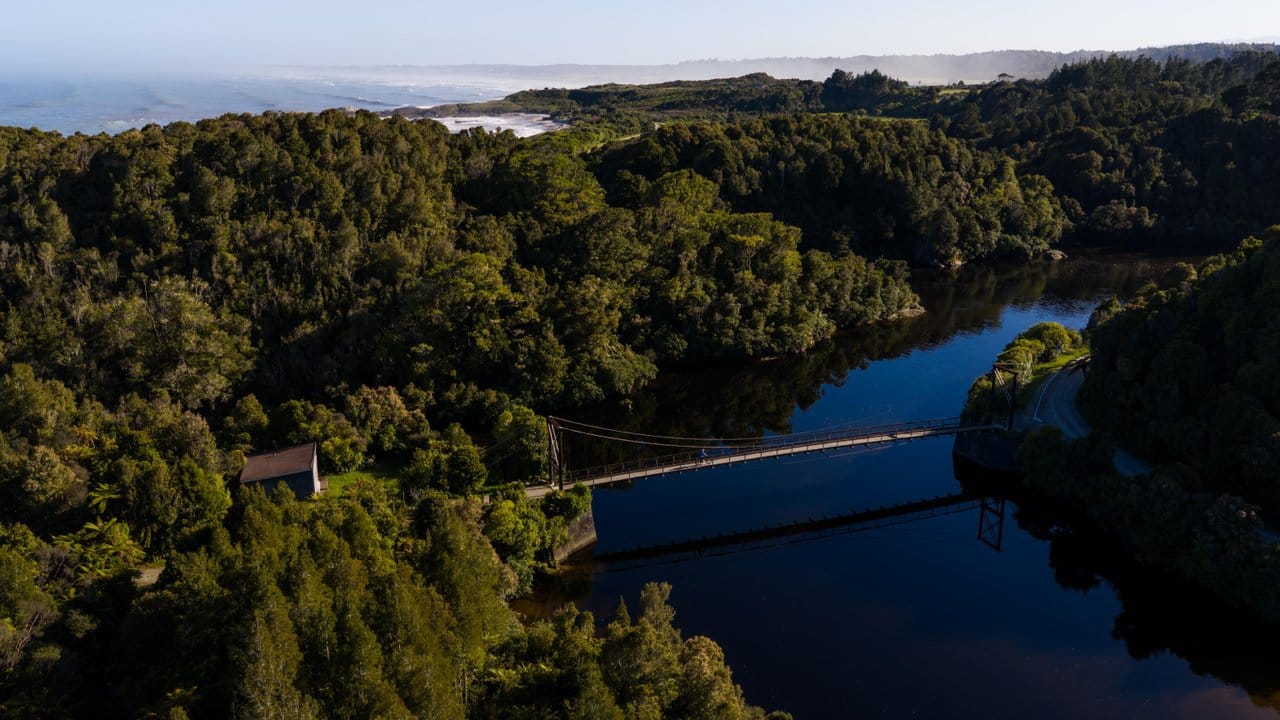
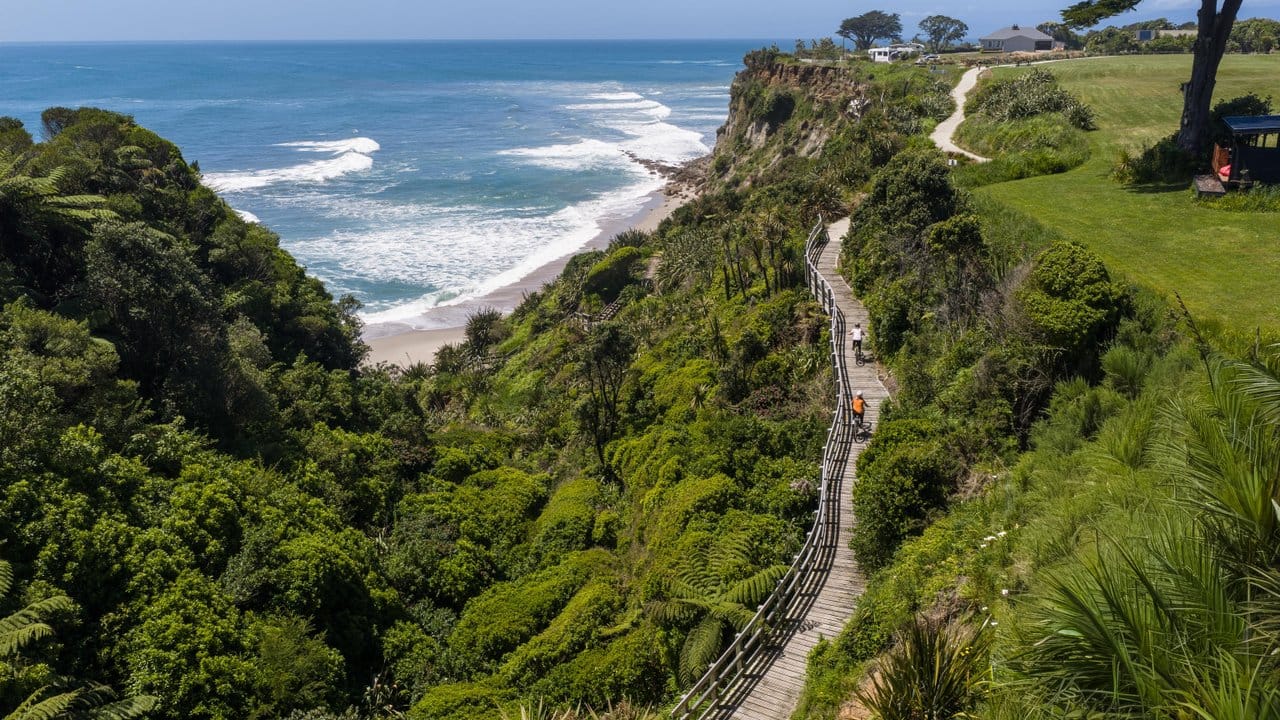
Kawatiri Coastal Trail
It took five years of construction before the full Kawatiri Coastal Trail was complete.
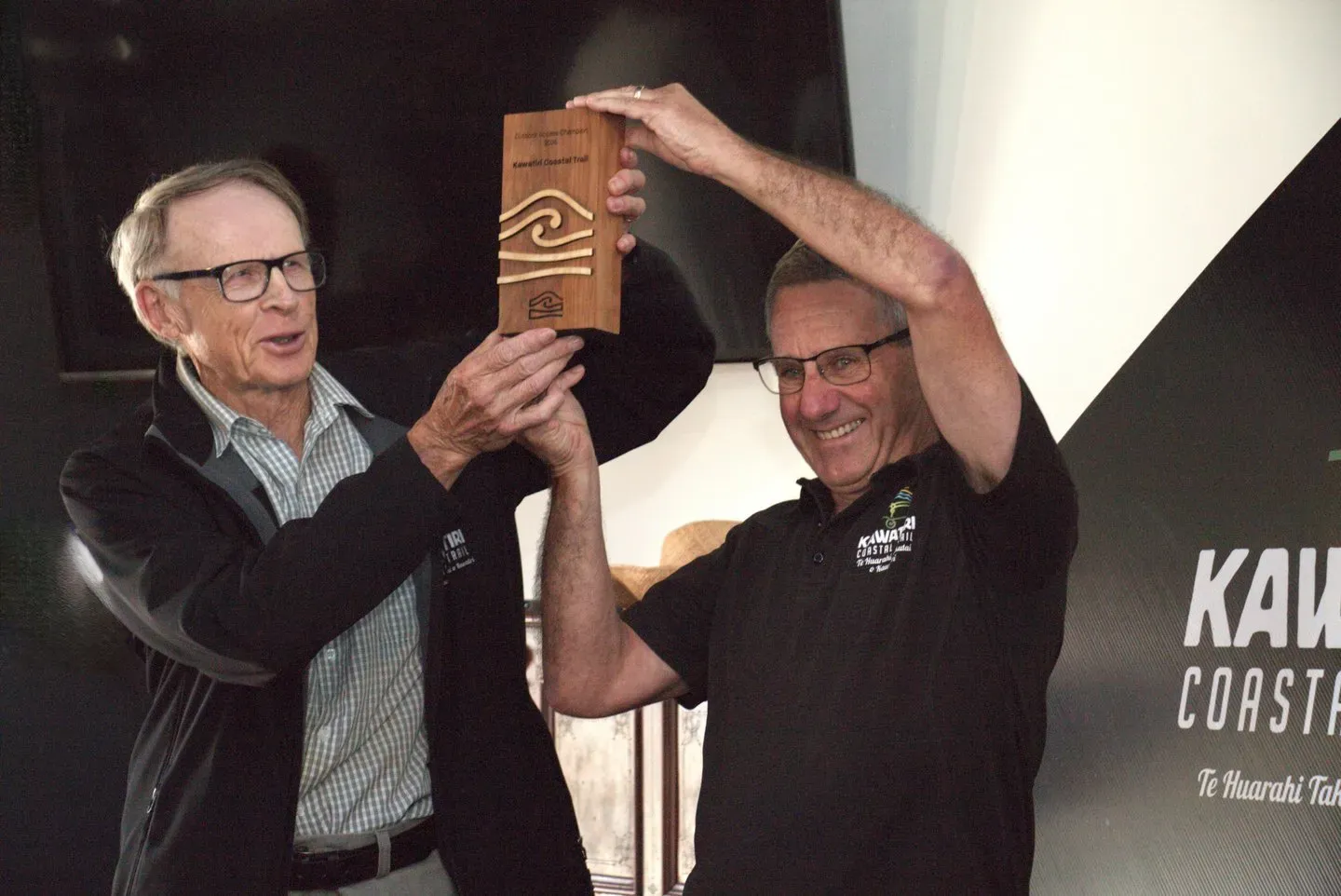
Almost a year after the trail opened, there was another moment worth celebrating. In March 2026, the Charleston-Westport Coastal Trail Trust received the national Outdoor Access Champion Award, recognising a decade of work creating public access through land that included private property, culturally significant places and some fairly complicated terrain.
Richard Niederer and Stu accepted the award on behalf of the Trust, although its recognition stretched much further than the two men holding it. It acknowledged the landowners, Ngāti Waewae, agencies, volunteers, contractors and community who had helped make the route possible.
It would be easy to measure what resulted in kilometres, bridges and dollars, but as Stu points out that misses something important. The trail now connects communities that once sat apart along this stretch of coast. It carries runners, walkers, cyclists and families.
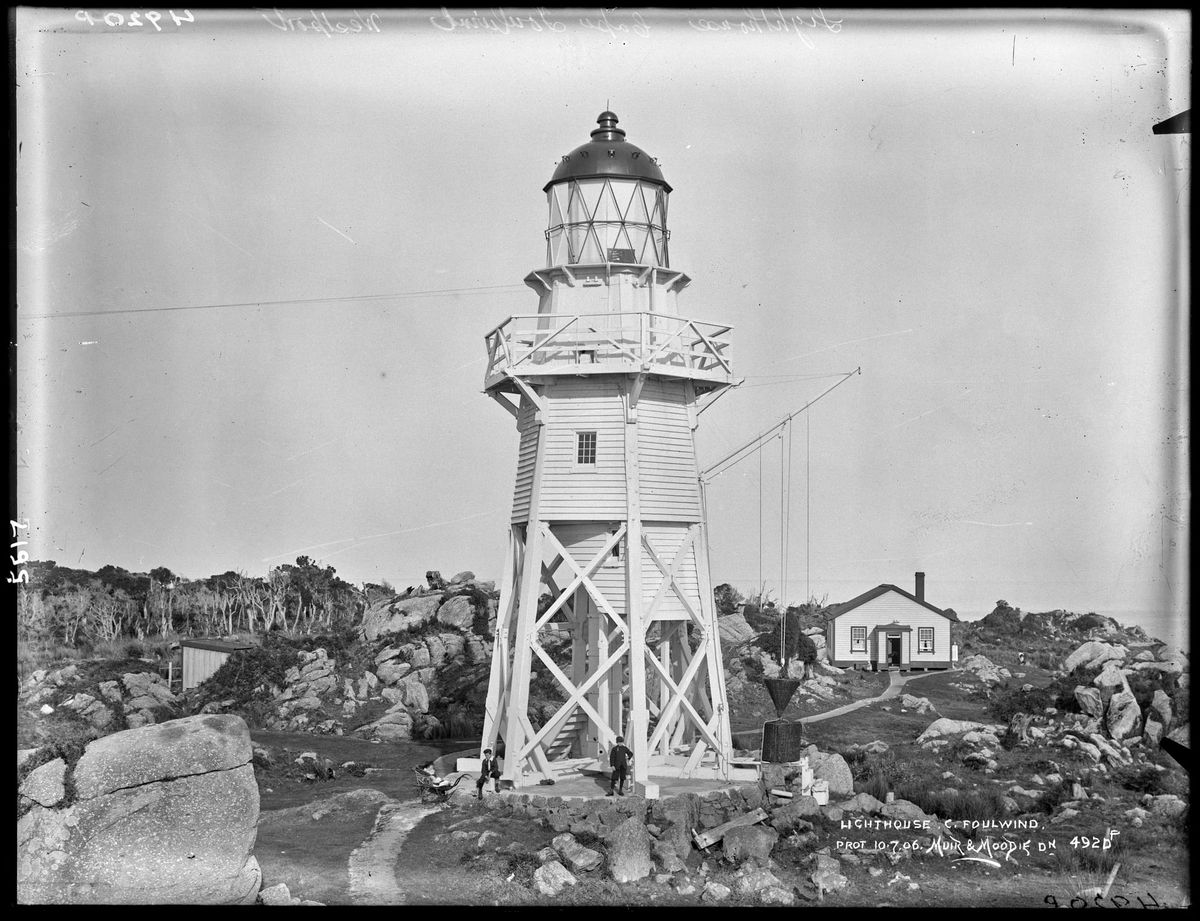
Interpretation panels tell stories of ecology, history and culture. Schools use it, events happen on it, conservation work takes place beside it and locals use it simply because they want to get outside before or after work. People also come from far and wide to experience it.
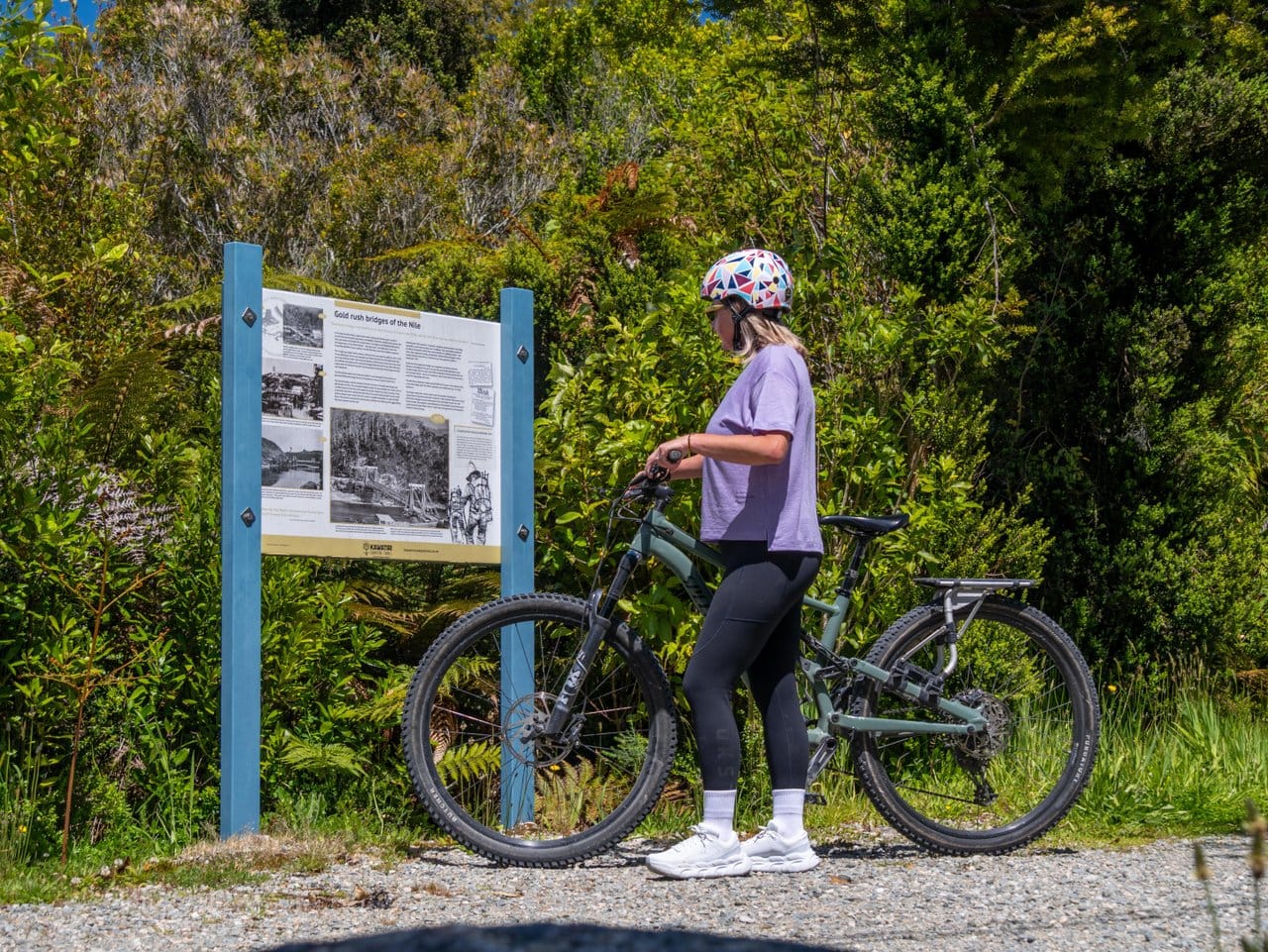
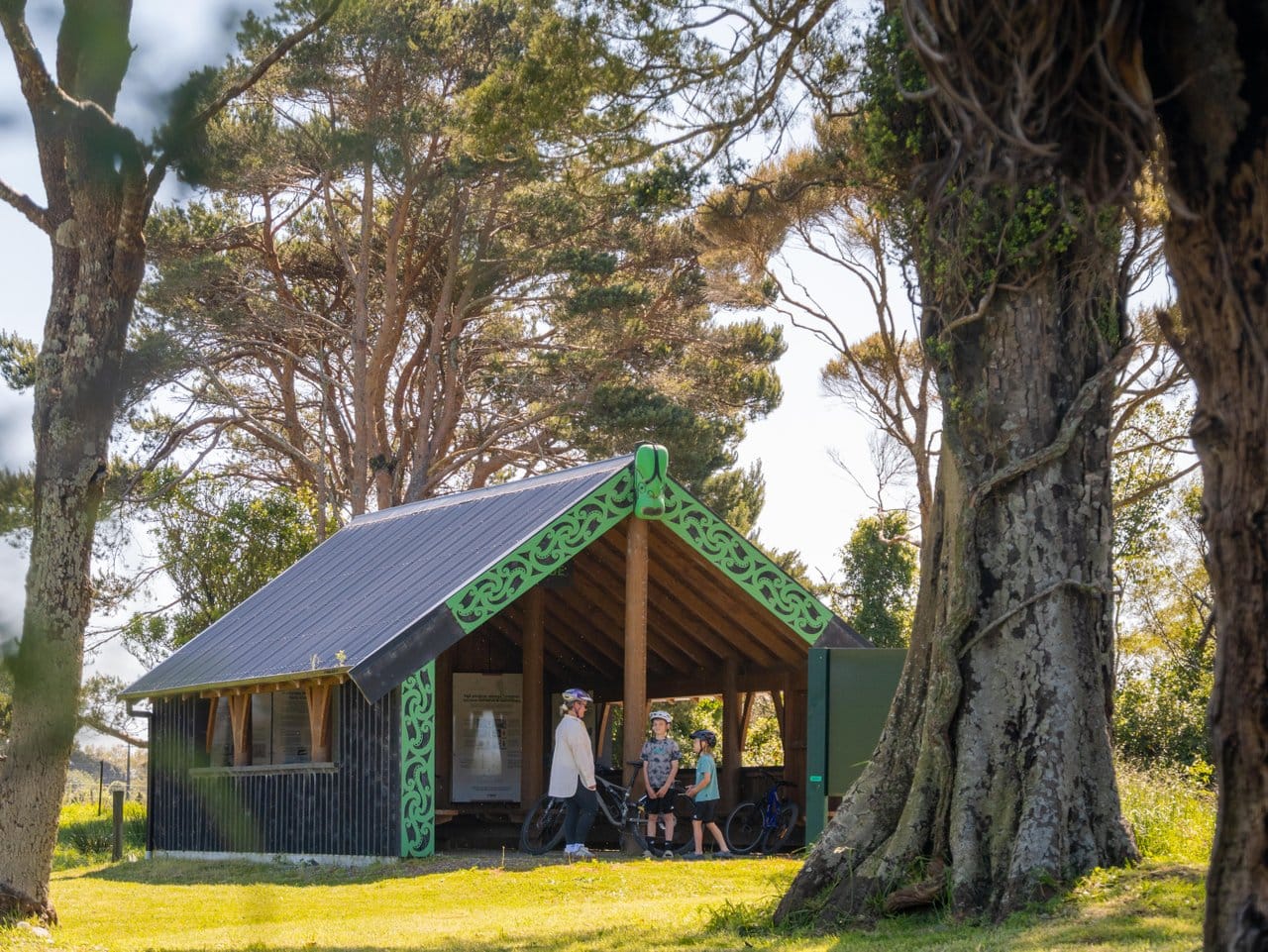
Image thanks to Bare Kiwi - Development West Coast
Back at Trail HQ, Stu still resists any suggestion that this should be his story. He talks instead about the landowners, trustees, contractors, agencies, volunteers and all the other people who kept turning up whenever another problem needed solving.
Before I leave, he asks me to stand and look out the first-floor window. Below us is a workshop full of bikes for hire. From here, people can organise self-guided rides, shuttles, accommodation and everything else they need to come and cycle the Coast. It is a long way from those first conversations in 2015 about what cycling tourism might offer Buller.
Forty people gathered in Charleston to discuss a trail that did not exist. Ten years later, it does, because enough people kept saying yes.